
Annals of Neurology Animal Study

Auditory Slow-Wave Stimulation Reduces Axonal Damage in Rat Brain Injury Model

Closed-loop acoustic triggers during deep sleep preserved white matter integrity and cognitive function in a preclinical study of TBI.
Auditory Slow-Wave Stimulation Reduces Axonal Damage in Rat Brain Injury Model
For Doctors in a Hurry
  • Clinicians lack effective interventions to mitigate persistent brain tissue damage and cognitive impairments following traumatic brain injury.
  • Researchers used closed-loop auditory stimulation to enhance slow-wave sleep in twenty-three rats following experimental traumatic brain injury.
  • Auditory stimulation reduced axonal injury and improved recognition indexes (p=0.026) compared to untreated brain-injured rats (p=0.156).
  • The authors concluded that enhancing slow-wave activity provides robust disease modification by mitigating histopathological and cognitive sequelae.
  • This proof-of-concept study suggests that nonobtrusive, sleep-based therapies could serve as a therapeutic intervention for brain injury survivors.

Neuromodulation of Sleep Architecture in Traumatic Brain Injury

Traumatic brain injury remains a significant clinical challenge, frequently resulting in chronic cognitive and motor impairments that necessitate extensive rehabilitation [1]. While physical therapies address functional recovery, interest is growing in neuromodulation, the use of external stimuli to alter nerve activity, as a means to target the underlying neurobiology of injury [2, 3]. Research into non-invasive stimulation suggests that precisely timed interventions can influence cortical connectivity and enhance neuroplasticity, the brain's capacity for reorganization [4, 5]. Sleep, particularly the deep stages characterized by slow-wave activity, is believed to be critical for neural repair, yet methods to reliably harness this process are limited. A recent study in a rat model of TBI explored whether a specific neuromodulation technique, closed-loop auditory stimulation, could directly improve outcomes. This method uses real-time brain monitoring to deliver sound triggers at specific phases of brain waves. The findings indicate that enhancing slow-wave activity reduced diffuse axonal injury and decreased demyelination, with a high probability of treatment effect (approximately 97 percent posterior differences) between treated and untreated TBI groups [6].

Precision Acoustic Targeting of Slow-Wave Sleep

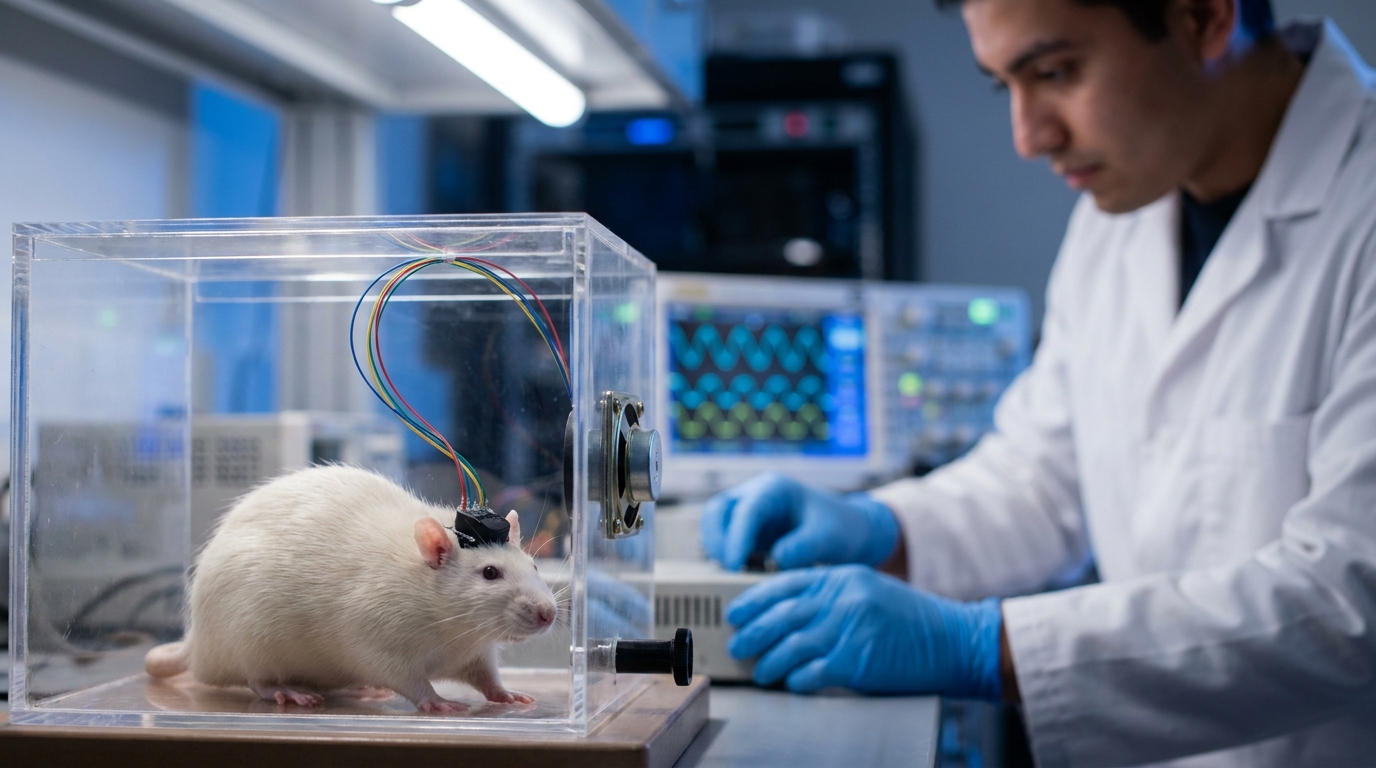
Pharmacological strategies to augment slow-wave sleep, the deep, restorative phase marked by low-frequency neuronal oscillations, often lack the specificity needed for clinical application, producing broad sedative effects instead of targeted repair. To overcome this, researchers developed a preclinical closed-loop auditory stimulation (CLAS) paradigm. This system provides highly specific and temporally precise enhancement of slow-wave activity by delivering 30-millisecond sound triggers synchronized to the brain's own rhythm. The acoustic pulses are timed to the up-phase of detected slow waves, a period of neuronal depolarization when the brain is most receptive to synchronization, effectively deepening the sleep state without medication. The study evaluated this intervention using three rat cohorts. The primary experimental group consisted of rats with TBI receiving active stimulation, designated the TBI upCLAS group (n = 8). This group was compared against two control cohorts receiving a mock procedure where brain activity was monitored without sound triggers: a mockCLAS non-TBI group (n = 8) to establish a healthy baseline, and a mockCLAS TBI group (n = 7) to model the natural course of injury. This design allowed the researchers to isolate the effects of sleep enhancement on the histopathological and cognitive consequences of brain trauma.

Mitigation of Diffuse Axonal Injury and Demyelination

The study's primary endpoint was the capacity of enhanced sleep to mitigate brain tissue damage. Using Bayesian analysis, a statistical method that calculates the probability of an outcome, the researchers assessed key structural changes. The findings revealed that sound-mediated enhancement of slow-wave activity reduces diffuse axonal injury, the widespread shearing of nerve fibers that is a core pathology of TBI. In the untreated TBI mockCLAS group, posterior estimates for axonal injury fell outside the 95% confidence intervals of both the healthy non-TBI group and the treated TBI upCLAS group, confirming a distinct pathological state. In contrast, the posterior distributions for axonal injury in the TBI upCLAS and non-TBI groups largely overlapped, with only approximately 13% posterior differences >0. This statistical overlap suggests a negligible difference between the treated injured rats and healthy controls, indicating that the intervention substantially preserved axonal integrity. Furthermore, the stimulation was found to decrease demyelination, the loss of the protective myelin sheath around axons. The analysis showed approximately 97% posterior differences >0 for demyelination between the TBI mockCLAS and TBI upCLAS groups, demonstrating a high probability of a robust treatment effect. The comparison between the healthy non-TBI group and the TBI upCLAS group yielded approximately 60% posterior differences >0, further quantifying the degree of tissue preservation achieved.

Preservation of Cognitive Function and Microglial Modulation

Beyond structural repair, the study assessed whether sleep enhancement could prevent the cognitive deficits that often follow TBI. Using the novel object recognition test, a behavioral assay of memory, the researchers found that the intervention preserves cognitive ability. Both the healthy non-TBI group (p = 0.031) and the treated TBI upCLAS group (p = 0.026) demonstrated recognition indexes significantly above chance level, indicating intact memory function. In stark contrast, the untreated mockCLAS TBI rats showed a pronounced cognitive deficit, failing to perform above chance (p = 0.156). The investigation also extended to the cellular level, revealing that the microglial response to brain injury was modulated by deep sleep enhancement. Microglia are the brain's resident immune cells, and their activity is a key component of the neuroinflammatory cascade after injury. The study measured the area covered by ionized calcium-binding adaptor molecule 1, a protein that serves as a marker for microglial activation. TBI upCLAS rats exhibited reduced ionized calcium-binding adaptor molecule 1+ area coverage compared to non-TBI controls (p = 0.0445), suggesting that the intervention alters the post-traumatic inflammatory environment, which may contribute to the observed tissue preservation and cognitive protection.

Clinical Implications for Post-Traumatic Recovery

For the millions of individuals living with the consequences of traumatic brain injury, there are no established therapies that modify the underlying disease course. While slow-wave sleep is known to be involved in recovery, clinical tools to harness this process have been lacking. This preclinical study demonstrates that a non-invasive, non-pharmacological intervention can directly influence the brain's restorative mechanisms. By using precisely timed auditory stimulation to enhance the intensity of deep sleep, the researchers established proof-of-concept that this method can mitigate both the histopathological and cognitive sequelae of brain trauma. The data show a clear, disease-modifying effect. The intervention reduced diffuse axonal injury to levels nearly indistinguishable from those in uninjured controls, with posterior distributions for the TBI upCLAS (n = 8) and non-TBI (n = 8) groups largely overlapping. It also decreased demyelination, with a high probability of effect (approximately 97% posterior differences >0) compared to untreated TBI rats (n = 7). This structural preservation was accompanied by functional benefits, as treated rats maintained cognitive performance (p = 0.026) while their untreated counterparts developed significant deficits (p = 0.156). These findings suggest that a clinically translatable, sleep-based therapy could one day offer a targeted intervention for TBI survivors, potentially reducing the long-term burden of white matter damage and memory loss.

Study Info
Auditory Stimulation of Slow‐Wave Sleep Promotes Recovery after Brain Injury in an Animal Model
Carlos G. Moreira, Adrian Müllner, Meltem Gönel, Pascal Hofmann, et al.
Journal Annals of Neurology
Published May 10, 2026

References

1. Banyai AD, Brișan C. Robotics in Physical Rehabilitation: Systematic Review. Healthcare. 2024. doi:10.3390/healthcare12171720

2. Zhang KK, Matin R, Gorodetsky C, Ibrahim GM, Gouveia FV. Systematic review of rodent studies of deep brain stimulation for the treatment of neurological, developmental and neuropsychiatric disorders. Translational Psychiatry. 2024. doi:10.1038/s41398-023-02727-5

3. Andrade DCD, García‐Larrea L. Beyond trial‐and‐error: Individualizing therapeutic transcranial neuromodulation for chronic pain. European Journal of Pain. 2023. doi:10.1002/ejp.2164

4. Camargo-Vargas D, Callejas-Cuervo M, Mazzoleni S. Brain-Computer Interfaces Systems for Upper and Lower Limb Rehabilitation: A Systematic Review. Sensors. 2021. doi:10.3390/s21134312

5. Halkiopoulos C, Gkintoni E, Boutsinas B. Mapping the Digital Mind: A Meta-Analysis of EEG Biomarkers in Cognition, Emotion, and Mental Health. Brain Sciences. 2026. doi:10.3390/brainsci16040368

6. Moreira CG, Müllner A, Gönel M, et al. Auditory Stimulation of Slow-Wave Sleep Promotes Recovery after Brain Injury in an Animal Model.. Annals of neurology. 2026. doi:10.1002/ana.78234