
- The study investigated the molecular alterations contributing to excitation/inhibition imbalance in Fragile X Syndrome (FXS).
- Researchers performed cell-type specific mRNA sequencing in Fmr1 knockout mice, integrating transcriptomic, circuit, and behavioral data.
- Among 184 concordantly dysregulated genes, Rapgef4 (Epac2) was identified as an FMRP target, ASD risk gene, and brain-enriched.
- The authors concluded that EPAC2 is a potential therapeutic target for FXS, based on its role in synaptic maturation and plasticity.
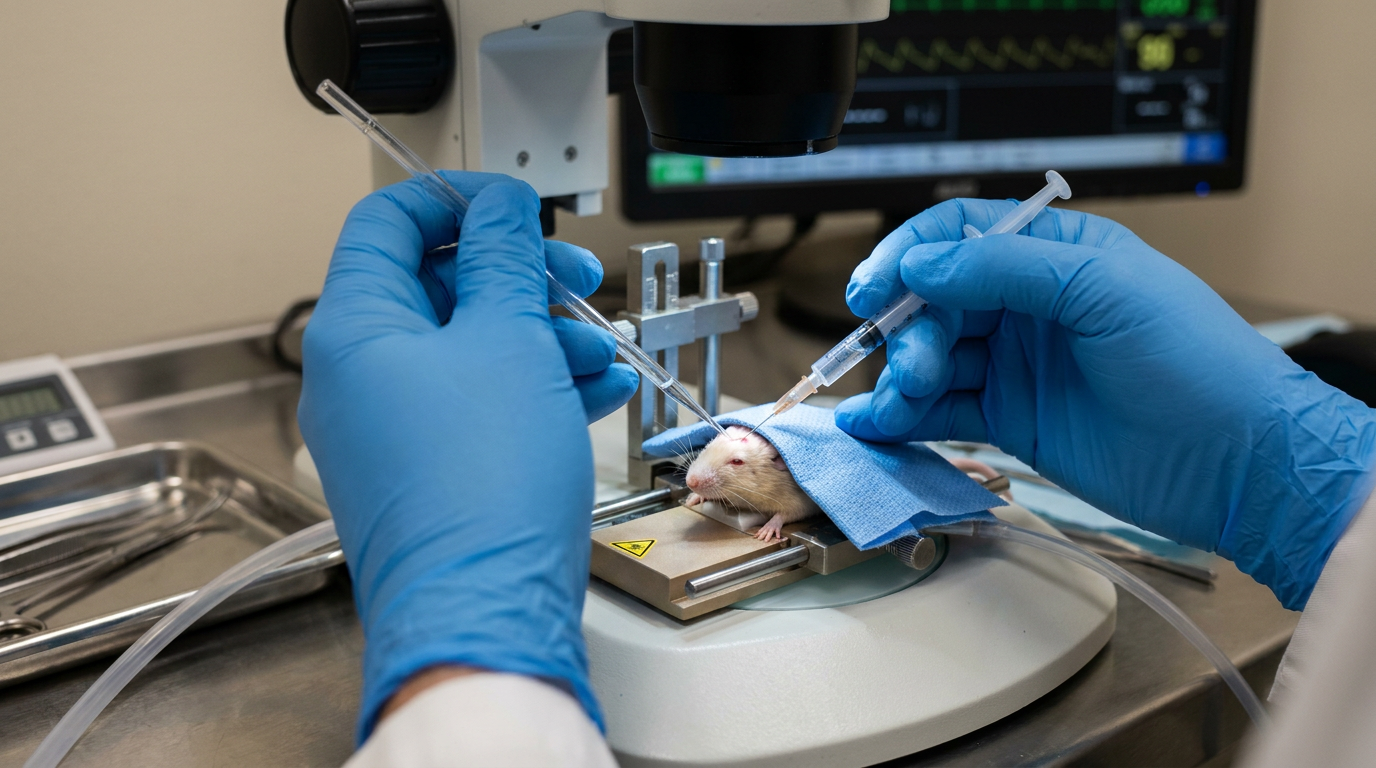
- Systemic EPAC2 antagonist administration restored cortical circuit function and ameliorated sensory behavioral phenotypes in Fmr1 KO mice.
Unraveling Molecular Dysregulation in Fragile X Syndrome
Fragile X Syndrome (FXS), the leading monogenic cause of intellectual disability and a common genetic basis for autism, presents significant clinical management challenges [1]. Its complex symptomatology is widely attributed to an imbalance between excitatory and inhibitory signals within neural circuits, a disruption that can impair synaptic plasticity and network development [1, 2, 3, 4]. Despite a clear genetic origin, therapies that correct this fundamental neurobiological imbalance have remained elusive, leaving a critical gap in patient care [5]. A recent study offers new clarity by dissecting the molecular events within specific cell types that drive this dysregulation, identifying a precise pathway that may be amenable to therapeutic intervention.
Pinpointing Cell-Specific Molecular Changes in FXS
To map the molecular origins of the excitation/inhibition imbalance in Fragile X Syndrome, investigators employed a high-resolution technique to profile gene activity in specific neuronal populations. Using cell type specific messenger RNA (mRNA) sequencing, they could precisely measure which genes were active in cortical excitatory versus inhibitory neurons from Fmr1 knockout mice, a standard preclinical model for FXS. This approach moves beyond analyzing brain tissue as a whole, allowing for a direct comparison of gene expression in the distinct cell types that govern circuit activity. The researchers then integrated these transcriptomic results, which provide a snapshot of gene activity, with measurements of neural circuit function and observable sensory behaviors in the mice. This multi-layered analysis was designed to connect specific molecular changes to their functional consequences, with the ultimate goal of prioritizing therapeutic targets that address the core pathophysiology of the disorder.
Opposing Gene Expression Patterns Drive Imbalance
The cell-specific analysis revealed a stark and divergent pattern of molecular disruption. The researchers identified numerous differentially expressed genes, meaning genes with significantly altered activity levels in the Fmr1 knockout mice compared to controls. A key finding was that these genes were largely upregulated in Camk2a-expressing excitatory neurons, the cells responsible for transmitting activating signals in the cortex. This suggests a state of heightened gene activity within the brain's primary excitatory network. In direct contrast, the study found that differentially expressed genes were largely downregulated in Pvalb-expressing inhibitory neurons. These neurons, marked by the protein parvalbumin, are a critical class of interneurons that provide fast-spiking inhibition to regulate and balance circuit activity. The reduced gene activity in these cells points to impaired inhibitory function. The underlying signaling pathways were also often altered in opposite directions, providing a clear molecular basis for the excitation/inhibition imbalance that is a central hypothesis in FXS pathophysiology.
EPAC2 Emerges as a Key Molecular Target
After identifying opposing patterns of gene dysregulation, the investigators searched for a common molecular driver by focusing on the 184 genes that were consistently altered across both excitatory and inhibitory cell types. To distill this list into a high-priority therapeutic candidate, they applied a strict filtering process. They looked for a gene that was not only dysregulated in both cell types but was also a known target of the Fragile X Mental Retardation Protein (FMRP), the protein whose absence causes FXS. This criterion is critical, as FMRP normally functions to regulate the translation of specific mRNAs at the synapse. Among the 184 candidates, only one gene, Rapgef4, met this stringent criterion. This gene, which codes for the protein EPAC2, was also notable for being a recognized autism spectrum disorder (ASD) risk gene and being highly enriched in the brain. The EPAC2 protein is known to be involved in synaptic maturation and plasticity, processes fundamental to learning and memory that are disrupted in FXS. This convergence of evidence positioned EPAC2 as a uniquely compelling target for intervention.
Restoring Function and Behavior with EPAC2 Antagonism
To test the therapeutic relevance of EPAC2, the researchers administered a compound that blocks its activity, known as an EPAC2 antagonist, to the Fmr1 knockout mice. The results of this intervention were twofold. First, at the neurophysiological level, the treatment restored cortical circuit function, suggesting a normalization of the electrical communication between neurons that was disrupted in the FXS model. Second, this restoration of circuit integrity translated to functional improvements. The systemic administration of the EPAC2 antagonist also ameliorated sensory behavioral phenotypes. This is clinically relevant as sensory hypersensitivities are a common and challenging symptom for individuals with FXS. By demonstrating that blocking EPAC2 can correct deficits at both the circuit and behavioral levels in a preclinical model, these findings establish EPAC2 as a potential target for therapy in Fragile X Syndrome.
References
1. Suresh A, Kourdougli N, Buth J, et al. Translatome profiling reveals opposing alterations in inhibitory and excitatory neurons of Fragile X mice and identifies EPAC2 as a therapeutic target. bioRxiv. 2025. doi:10.1101/2025.04.21.649817
2. Herstel LJ, Wierenga CJ. Distinct Modulation of I h by Synaptic Potentiation in Excitatory and Inhibitory Neurons. eNeuro. 2024. doi:10.1523/eneuro.0185-24.2024
3. Mlostek M, Zeng J, Urbańska M, Jaworski J. Dendritic arbor dynamics and stability in health and disease. Acta Neurobiologiae Experimentalis. 2023. doi:10.55782/ane-2023-2456
4. Woolfrey KM, Srivastava DP. Control of Dendritic Spine Morphological and Functional Plasticity by Small GTPases. Neural Plasticity. 2016. doi:10.1155/2016/3025948
5. Wittkowski KM, Sonakya V, Bigio B, et al. A novel computational biostatistics approach implies impaired dephosphorylation of growth factor receptors as associated with severity of autism. Translational Psychiatry. 2014. doi:10.1038/tp.2013.124