
- This study addressed the unmet treatment need for fibromyalgia by investigating adjunctive D-Cycloserine with repetitive Transcranial Magnetic Stimulation.
- A double-blind, randomized trial with 47 participants evaluated D-Cycloserine (100 mg) or placebo alongside 20 daily iTBS sessions.
- There was a very large overall treatment effect on FIQR (Cohen's d = 1.41, 95% CI: 0.82-2.00), but no significant between-group difference.
- The authors concluded that iTBS substantially improved fibromyalgia symptoms, potentially masking specific effects of adjunctive D-Cycloserine.
- Clinicians should consider iTBS for fibromyalgia symptom improvement, noting D-Cycloserine's specific benefit for depressive symptoms.
Advancing Fibromyalgia Management: The Role of Non-Invasive Brain Stimulation
Fibromyalgia continues to present a significant therapeutic challenge, with many patients experiencing persistent symptoms despite available treatments [1]. In this context, clinicians are increasingly interested in non-invasive brain stimulation techniques. One such method is repetitive transcranial magnetic stimulation (rTMS), which uses magnetic fields to modulate cortical excitability in brain regions implicated in pain and mood [2, 3, 4]. A more rapid form of this technology, intermittent theta-burst stimulation (iTBS), has shown efficacy in reducing pain in conditions such as neuropathic orofacial pain and central post-stroke pain [5, 6, 7, 8]. However, its utility in fibromyalgia, particularly in combination with pharmacological agents designed to enhance its effects, requires further clarification [9]. A recent clinical trial provides new data on the application of iTBS, both as a standalone intervention and with an adjunctive medication, for adults with fibromyalgia.
Investigating Adjunctive D-Cycloserine with iTBS for Fibromyalgia
Building on prior studies that have demonstrated a reduction in fibromyalgia symptom severity with rTMS, researchers sought to determine if these effects could be augmented. The investigation centered on intermittent Theta-Burst Stimulation (iTBS) directed at the dorsolateral prefrontal cortex (DLPFC), a key node in the brain's pain and mood regulation networks. The central hypothesis was that an adjunctive medication could enhance the neuroplastic effects of the stimulation. Specifically, the trial evaluated the addition of D-Cycloserine, a partial agonist at the N-methyl-D-aspartate (NMDA) receptor. Because NMDA receptors are critical for synaptic plasticity, the biological mechanism thought to underlie the therapeutic effects of rTMS, the authors theorized that D-Cycloserine might potentiate the clinical benefits of iTBS for adults with fibromyalgia.
Trial Design and Intervention Protocol
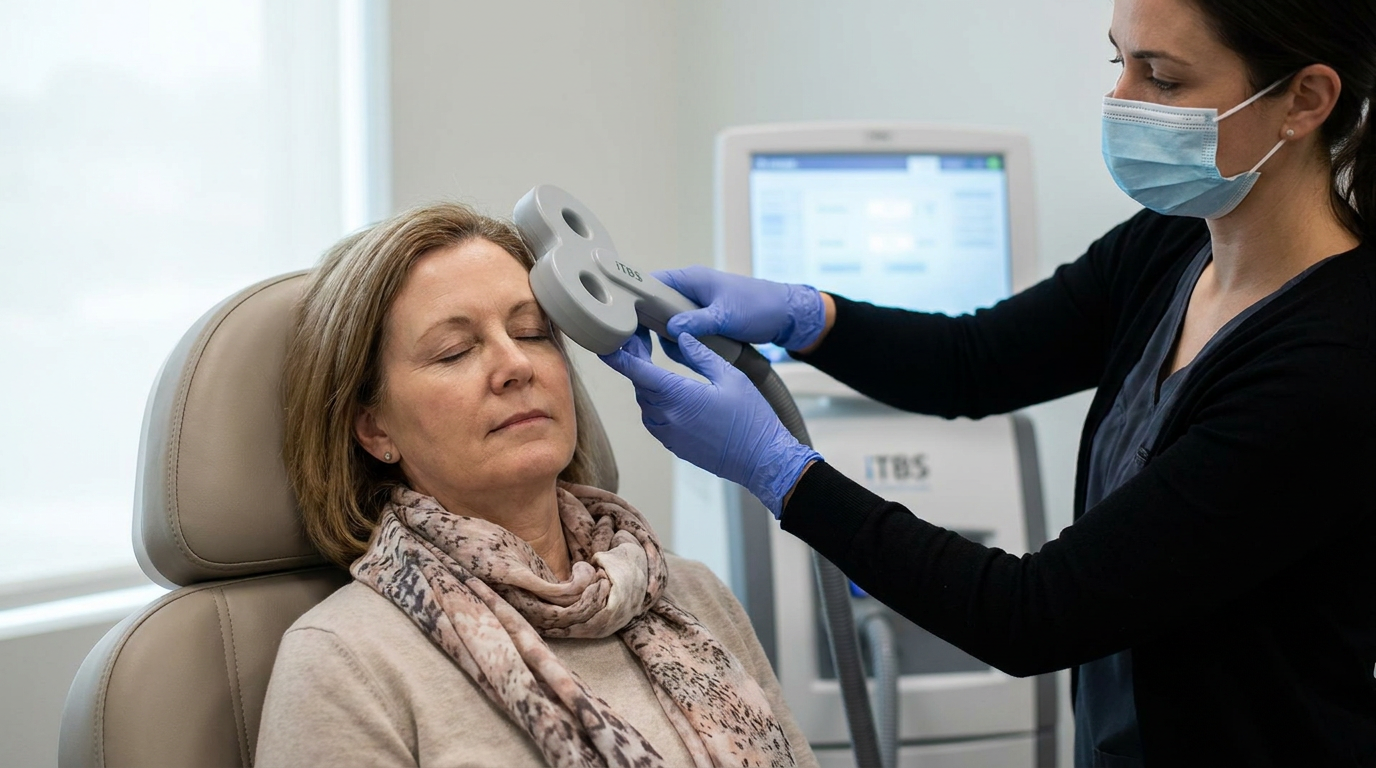
The study was a double-blind, randomized controlled trial involving adults diagnosed with fibromyalgia. Every participant received a course of 20 daily active iTBS treatments, administered on weekdays over a four-week period. Each session consisted of 600 pulses delivered to the left dorsolateral prefrontal cortex (DLPFC), a region known for its role in executive function and the cognitive-emotional processing of pain. The stimulation was calibrated to 80% of the individual's resting motor threshold to ensure a consistent and tolerable dosage. In the double-blind portion of the trial, participants were randomly assigned to take either 100 mg of D-Cycloserine or a matching placebo orally before each iTBS session. The primary efficacy endpoint was the change in the Fibromyalgia Impact Questionnaire - Revised (FIQR) score from baseline to the end of the four-week treatment. Secondary outcomes included a battery of self-report and clinician-rated scales for fibromyalgia-associated symptoms, as well as quantitative sensory testing to objectively measure changes in pain perception. The trial is registered with ClinicalTrials.gov under the identifier NCT05395494.
Early Termination and Overall Treatment Effects
A planned interim analysis was conducted after n = 47 participants had completed the protocol. This analysis led to the trial's termination for futility, a standard procedural step taken when early data indicate a low probability of finding a statistically significant difference between the treatment arms for the primary outcome. In this case, the analysis suggested that adjunctive D-Cycloserine was unlikely to show a superior effect over placebo on the overall FIQR score if the trial were to continue to its planned completion. Despite this finding, the analysis uncovered a clinically significant effect from the stimulation itself. Across both groups, iTBS was associated with a very large overall treatment effect on the FIQR, with a Cohen's d of 1.41 (95% CI: 0.82-2.00). This indicates that the four-week course of iTBS, regardless of adjunctive treatment, produced a substantial improvement in overall fibromyalgia symptom severity for the participants.
D-Cycloserine's Specific Impact on Depressive Symptoms
While the addition of D-Cycloserine did not produce a greater improvement in the primary outcome of overall fibromyalgia symptoms, a more detailed look at secondary measures revealed a specific effect. The study found no significant between-group difference on the total Fibromyalgia Impact Questionnaire - Revised (FIQR) score. However, when analyzing mood-related symptoms separately, the data showed a greater decrease in depressive symptoms in the iTBS+D-Cycloserine group compared to the iTBS+Placebo group. This suggests that while iTBS alone provided a robust benefit for global fibromyalgia symptoms, the combination with D-Cycloserine offered a targeted advantage specifically for comorbid depressive symptoms. The authors speculate that the very large therapeutic effect of iTBS on the primary fibromyalgia measures may have created a ceiling effect, potentially masking other, more subtle contributions of adjunctive D-Cycloserine.
References
1. DeMayo MM, Sharifi V, Chen L, et al. Adjunctive D-cycloserine to intermittent theta-burst transcranial magnetic stimulation in fibromyalgia: a randomized placebo-controlled trial. Neuropsychopharmacology. 2026. doi:10.1038/s41386-026-02441-y
2. Lefaucheur J, Alemán A, Baeken C, et al. Evidence-based guidelines on the therapeutic use of repetitive transcranial magnetic stimulation (rTMS): An update (2014–2018). Clinical Neurophysiology. 2020. doi:10.1016/j.clinph.2019.11.002
3. Zhou J, Wang Y, Luo X, et al. Revisiting the effects of rTMS over the dorsolateral prefrontal cortex on pain: An updated systematic review and meta-analysis. Brain stimulation. 2024. doi:10.1016/j.brs.2024.07.011
4. Zucchella C, Mantovani E, Icco RD, Tassorelli C, Sandrini G, Tamburin S. Non-invasive Brain and Spinal Stimulation for Pain and Related Symptoms in Multiple Sclerosis: A Systematic Review. Frontiers in Neuroscience. 2020. doi:10.3389/fnins.2020.547069
5. Liu Y, Miao R, Zou H, Hu Q, Yin S, Zhu F. Repetitive transcranial magnetic stimulation in central post-stroke pain: a meta-analysis and systematic review of randomized controlled trials. Frontiers in Neuroscience. 2024. doi:10.3389/fnins.2024.1367649
6. Diao Y, Xie Y, Pan J, Liao M, Liu H, Liao L. The Effectiveness of High-Frequency Repetitive Transcranial Magnetic Stimulation on Patients with Neuropathic Orofacial Pain: A Systematic Review of Randomized Controlled Trials. Neural Plasticity. 2022. doi:10.1155/2022/6131696
7. Mutz J, Vipulananthan V, Carter B, Hurlemann R, Fu CH, Young AH. Comparative efficacy and acceptability of non-surgical brain stimulation for the acute treatment of major depressive episodes in adults: systematic review and network meta-analysis. BMJ. 2019. doi:10.1136/bmj.l1079
8. Drabek M, Hodkinson DJ, Horvath S, et al. Brain connectivity-guided, Optimised theta burst transcranial magnetic stimulation to improve Central Pain Modulation in knee Osteoarthritis Pain (BoostCPM): protocol of a pilot randomised clinical trial in a secondary care setting in the UK. BMJ Open. 2023. doi:10.1136/bmjopen-2023-073378
9. Fitzgibbon BM, Hoy KE, Knox L, et al. Evidence for the improvement of fatigue in fibromyalgia: A 4‐week left dorsolateral prefrontal cortex repetitive transcranial magnetic stimulation randomized‐controlled trial. European Journal of Pain. 2018. doi:10.1002/ejp.1213