
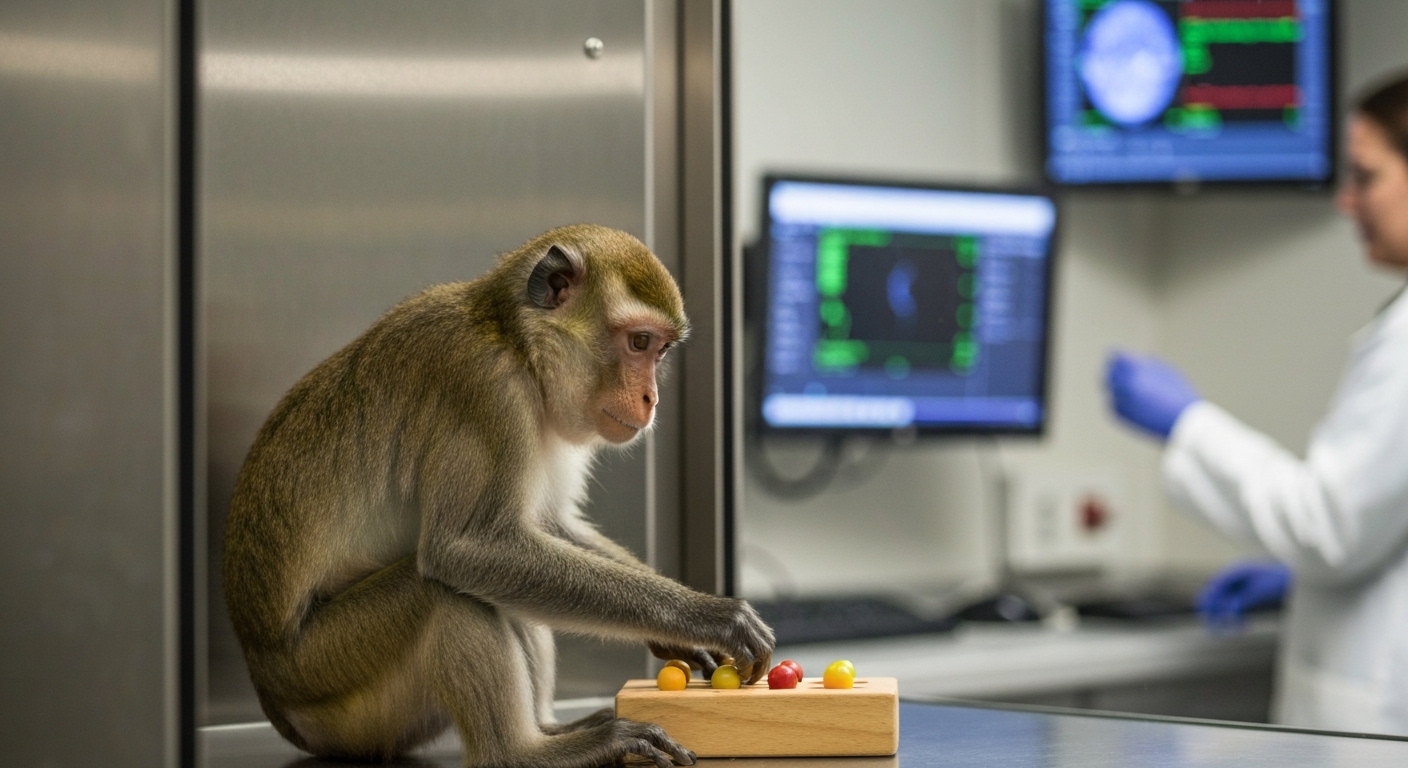
- Previous SHANK3 macaque studies had limited insights into Phelan-McDermid syndrome due to small cohorts and mosaicism.
- Researchers generated a larger F1 generation of heterozygous SHANK3+/- macaques for comprehensive behavioral and cognitive studies.
- SHANK3+/- macaques exhibited diminished auditory responses and impaired paired-association memory, but no major working memory deficits.
- The authors concluded that SHANK3 haploinsufficiency causes diverse behavioral, physiological, and cognitive changes in macaques.
- This study established potential biomarkers and a multi-task array for evaluating autism-related phenotypes and testing therapeutics.
Unraveling Neurodevelopmental Disorders: The SHANK3 Connection
The complex etiologies and heterogeneous presentations of neurodevelopmental disorders, including autism spectrum disorder (ASD), pose a significant clinical challenge. Genetic factors are known to play a substantial role, with numerous genes implicated in conditions that affect brain development and function [1, 2]. For instance, haploinsufficiency of the SHANK3 gene is a direct cause of Phelan-McDermid syndrome, a severe disorder characterized by intellectual disability and ASD [3]. A clearer understanding of the mechanisms by which such genetic variations produce behavioral and cognitive phenotypes is essential for improving diagnostic precision and therapeutic strategies [4, 5]. While research has identified atypical brain functional connectivity [6] and cerebellar involvement in ASD [7, 8], a new study using a non-human primate model provides a more detailed view of the multifaceted impact of SHANK3 deficiency.
Modeling SHANK3-Associated Disorders: From Founder to F1 Generation
Haploinsufficiency of the SHANK3 gene is the primary cause of Phelan-McDermid syndrome, a condition marked by intellectual disability and features of autism spectrum disorder. To investigate the underlying pathophysiology, researchers previously developed founder SHANK3 macaques that showed some behaviors relevant to the syndrome. However, those initial studies were constrained by a small cohort and the presence of mosaicism, a genetic state where an individual's cells have different genetic makeups. This cellular-level inconsistency can create significant variability in symptom expression, complicating the interpretation of research findings.
To address these limitations, the investigators generated a larger, F1 generation of heterozygous SHANK3+/- macaques. This breeding strategy produced a cohort with a more uniform genetic background, providing the statistical power needed for a more rigorous and thorough evaluation. The resulting model allows for a clearer assessment of the direct behavioral, physiological, and cognitive consequences of SHANK3 haploinsufficiency, laying a more reliable foundation for translational research.
Behavioral and Physiological Manifestations of SHANK3 Haploinsufficiency
A comprehensive assessment of the F1 generation SHANK3+/- macaques revealed a distinct profile of behavioral and physiological changes that parallel symptoms seen in patients. The study documented sleep disturbances, a frequent and challenging comorbidity in clinical neurodevelopmental disorders. Behaviorally, the macaques showed diminished exploration of their environment and atypical social interactions, consistent with the social communication deficits characteristic of autism spectrum disorder. The animals also exhibited stereotypical behaviors, such as repetitive movements, which are a core diagnostic feature of several neurodevelopmental conditions.
Neurologically, the findings pointed to specific disruptions in brain function. The researchers observed altered brain functional connectivity in the SHANK3+/- macaques, indicating that communication and coordination between different brain regions were disrupted. This aligns with a growing body of evidence suggesting that aberrant neural circuitry is a key feature of many neurodevelopmental disorders. Furthermore, electroencephalogram (EEG) recordings identified a potential physiological biomarker: the SHANK3+/- macaques had a markedly diminished response to auditory stimulation. This objective, quantifiable measure of sensory processing deficit could prove valuable in future clinical trials for tracking disease progression or measuring target engagement of a therapeutic.
Cognitive Profiles: Specific Deficits and Intact Functions
The study's cognitive assessment of the SHANK3+/- macaques uncovered a nuanced profile of both impaired and preserved abilities, offering important clues for clinical intervention. Notably, the SHANK3+/- monkeys did not show major deficits in working memory tests, suggesting their capacity to hold and manipulate information over brief periods was largely unaffected. This preservation of a key executive function indicates that the cognitive impact of SHANK3 haploinsufficiency is not global but rather targets specific neural systems.
In contrast, a clear deficit emerged in another cognitive domain. The macaques exhibited an impaired ability to learn and execute a paired-association memory task, which requires forming and recalling links between unrelated items (for example, a specific shape and a specific sound). This difficulty points to a specific vulnerability in associative learning and memory consolidation, processes critical for many aspects of education and skill acquisition. For clinicians, this detailed cognitive profile suggests that therapeutic and educational strategies for patients with Phelan-McDermid syndrome might be more effective if they leverage intact working memory to support weaknesses in associative learning.
Identifying Biomarkers for Therapeutic Development
To enhance the translational potential of their model, the investigators developed and implemented a multi-task array, a standardized battery of tests designed to systemically evaluate autism-related phenotypes. This structured approach moves beyond anecdotal observations to provide a more objective and comprehensive characterization of the disorder's complex behavioral and cognitive features. By applying this array, the researchers were able to document the heterogeneity of phenotypes even within this genetically uniform group of SHANK3+/- macaques. This finding is clinically significant, as it mirrors the wide spectrum of symptom severity and presentation observed in human patients with single-gene neurodevelopmental disorders.
Crucially, this systematic evaluation established potential biomarkers for testing therapeutics. The specific, measurable outcomes from the multi-task array, from behavioral patterns to cognitive performance, can serve as objective endpoints in preclinical studies. This provides a robust platform for assessing whether a potential treatment is modifying the underlying pathophysiology of the disorder. By creating a reliable method to quantify treatment effects, this macaque model and its associated assessment tools may help accelerate the development of effective interventions for Phelan-McDermid syndrome and related conditions.
References
1. Hu M, Chen Y, Stalker J, et al. A map of human genome variation from population-scale sequencing. Nature. 2010. doi:10.1038/nature09534
2. Pardiñas AF, Holmans P, Pocklington A, et al. Common schizophrenia alleles are enriched in mutation-intolerant genes and in regions under strong background selection. Nature Genetics. 2018. doi:10.1038/s41588-018-0059-2
3. Jiang M, Li R, Yang X, et al. Behavioral phenotypes and neuronal biomarkers in F1 mutant macaque model of SHANK3-associated autism spectrum disorders.. Neuron. 2026. doi:10.1016/j.neuron.2026.04.018
4. Forkel SJ, Friedrich P, Schotten MTD, Howells H. White matter variability, cognition, and disorders: a systematic review. Brain Structure and Function. 2021. doi:10.1007/s00429-021-02382-w
5. Cerneckis J, Cai H, Shi Y. Induced pluripotent stem cells (iPSCs): molecular mechanisms of induction and applications. Signal Transduction and Targeted Therapy. 2024. doi:10.1038/s41392-024-01809-0
6. O’Reilly C, Lewis JD, Elsabbagh M. Is functional brain connectivity atypical in autism? A systematic review of EEG and MEG studies. PLoS ONE. 2017. doi:10.1371/journal.pone.0175870
7. Baumann O, Borra R, Bower JM, et al. Consensus Paper: The Role of the Cerebellum in Perceptual Processes. The Cerebellum. 2014. doi:10.1007/s12311-014-0627-7
8. Mitoma H, Buffo A, Gelfo F, et al. Consensus Paper. Cerebellar Reserve: From Cerebellar Physiology to Cerebellar Disorders. The Cerebellum. 2019. doi:10.1007/s12311-019-01091-9