
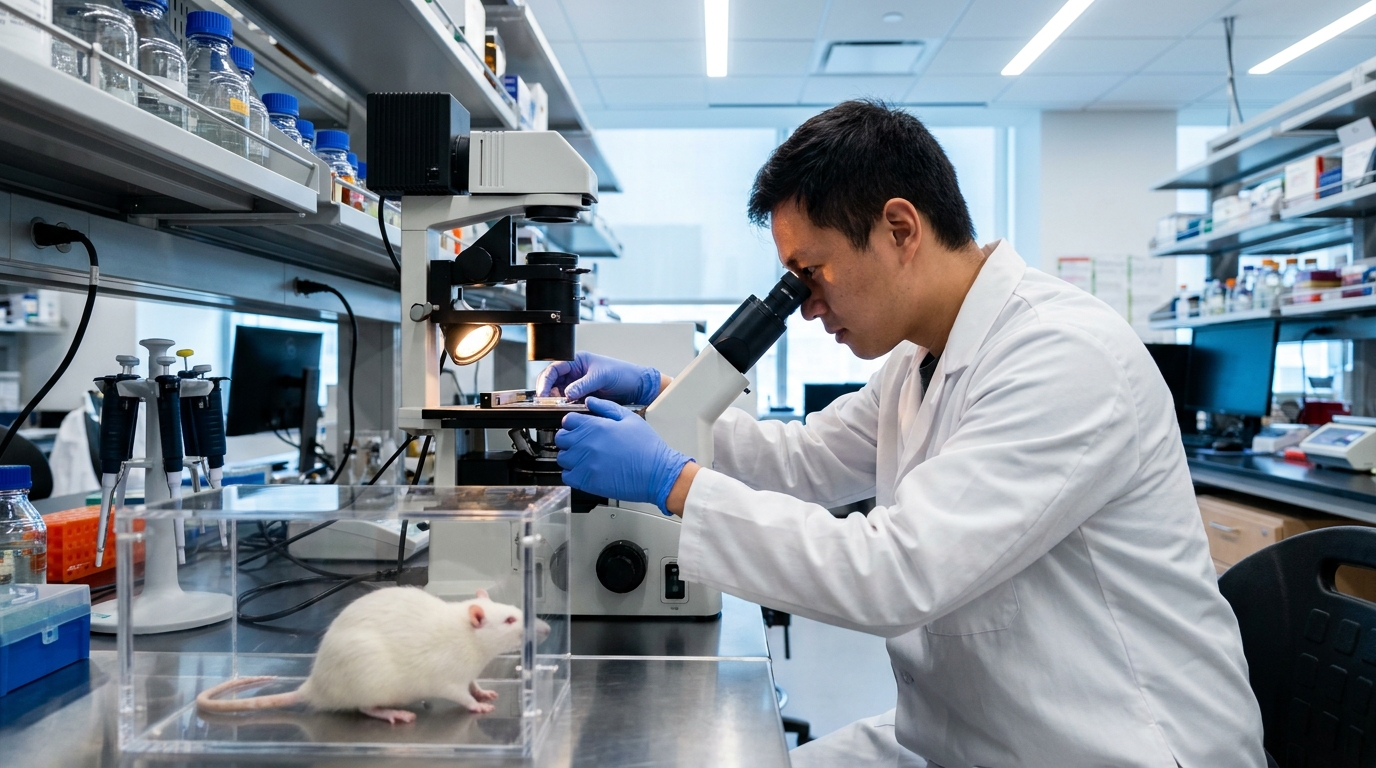
- Researchers investigated whether THC disrupts fear memory reconsolidation through sex-specific microglial recruitment and receptor signaling within the dorsal hippocampus.
- This study used adult male and female Wistar rats receiving 0.002 mg/kg of THC following contextual fear memory retrieval.
- THC impaired reconsolidation in both sexes, but male responses required microglial engagement and both CB1 and PPARgamma signaling.
- The researchers concluded that THC-induced memory impairment is cycle-dependent in females and relies on distinct neuroimmune pathways between sexes.
- These findings suggest that sex-tailored therapeutic strategies targeting neuroimmune pathways may improve clinical outcomes for patients with post-traumatic stress disorder.
Neuroimmune Modulation of Traumatic Memory
Post-traumatic stress disorder remains a significant clinical challenge characterized by the persistent reconsolidation (the biochemical process of restabilizing a memory trace after it has been reactivated) of intrusive fear memories [1, 2]. While traditional pharmacotherapy often targets neurotransmitter systems, evidence suggests that neuroinflammatory processes and microglial activity (the primary immune defense in the central nervous system) are central to maintaining psychiatric pathology [3, 4]. Chronic stress primes these immune cells, creating a pro-inflammatory environment characterized by elevated baseline levels of C-reactive protein (Fisher's z = 0.10, 95% CI = 0.05 to 0.14) and interleukin-6 (z = 0.08, 95% CI = 0.03 to 0.14) that may alter how the brain stores traumatic events [5, 6]. Furthermore, the efficacy of interventions targeting memory stability often varies by sex, a clinical variable frequently overlooked in standard protocols [1]. Recent data from a randomized, placebo-controlled trial of 105 participants demonstrate that inhibiting matrix metalloproteinase 9 (an enzyme required for synaptic remodeling) with minocycline can attenuate fear memory retention, suggesting that specific signaling pathways interact with the brain's immune landscape to modulate long-term symptoms [2].
Experimental Framework for Memory Disruption
To investigate the neurobiological mechanisms of memory interference, researchers utilized adult male and female Wistar rats. The study employed contextual fear conditioning, a process where animals learn to associate a specific environment with an aversive stimulus to create a stable fear memory. Once these memories were established, the researchers initiated memory retrieval to trigger the reconsolidation phase, the brief window during which a memory becomes labile and susceptible to pharmacological modification. Immediately following this retrieval, the rats received an intraperitoneal injection of 0.002 mg/kg of Δ9-tetrahydrocannabinol (THC), the primary psychoactive constituent of cannabis, or a vehicle control solution. The investigation focused specifically on the dorsal hippocampus, a brain region critical for spatial and contextual information processing. To determine how THC interacts with the immune environment of the brain, the authors assessed microglial involvement using immunofluorescence (a technique using fluorescently labeled antibodies to visualize specific proteins) to map cell activity. They further validated these observations through pharmacological and chemogenetic inhibition (a method using engineered receptors to selectively silence specific cell populations), allowing the team to observe how removing microglial function affected memory retention. Additionally, the researchers examined the specific molecular targets of the drug by administering selective antagonist infusions directly into the dorsal hippocampus to block either the cannabinoid type-1 (CB1) receptor or the peroxisome proliferator-activated receptor gamma (PPARγ), a nuclear receptor involved in glucose metabolism and the inflammatory response. For clinicians, understanding these pathways is vital, as it highlights how targeting the brain's immune system could eventually yield highly specific treatments for trauma-related disorders.
Divergent Mechanisms in Male and Female Subjects
The study demonstrated that THC impaired fear memory reconsolidation in both male and female rats, though the underlying molecular pathways differed significantly by sex. In the clinical context of post-traumatic stress disorder, microglia (the primary immune cells of the central nervous system) are highly engaged in fear-related circuits, actively participating in fear memory processing. This heightened microglial activity suggests that the neuroimmune environment plays a critical role in how traumatic memories are maintained or disrupted. The researchers found that the ability of THC to interfere with these memories involves a complex interplay between traditional cannabinoid signaling and immune modulation within the dorsal hippocampus. While the reconsolidation-impairing effect of THC is typically linked to cannabinoid type-1 (CB1) receptor signaling, this investigation identified a secondary target. THC also engages peroxisome proliferator-activated receptor gamma (PPARγ), a nuclear receptor that regulates immune cells. Both the CB1 and PPARγ receptors modulate neuroimmune processes, including microglial activity. In male rats, the disruption of fear memory required the recruitment of microglia and the activation of both receptor types. Specifically, the administration of 0.002 mg/kg of THC increased microglial engagement in the CA1 subfield of the dorsal hippocampus in males, and blocking either CB1 or PPARγ with selective antagonists completely prevented the drug's effect. The mechanism in female rats showed a distinct divergence. In females, the THC-induced reconsolidation blockade was cycle-dependent, occurring only during the estrus and diestrus phases of the estrous cycle. During the proestrus phase, THC failed to impair fear memory. Furthermore, unlike the dual-receptor requirement seen in males, the effect in females was mediated exclusively through CB1 activation, with no apparent requirement for PPARγ signaling. For practicing physicians, these results underscore that while the behavioral outcome of memory impairment appears similar across sexes, the underlying pharmacological targets are highly specific to the biological sex and hormonal state of the patient, complicating a one-size-fits-all approach to prescribing cannabinoids.
Microglial Recruitment and Dual Signaling in Males
The neurobiological response to fear memory reactivation in male subjects involves a localized immune activation within the dorsal hippocampus, a region critical for spatial and contextual memory processing. The researchers observed that the act of fear memory retrieval increased microglial engagement specifically in the CA1 subfield of the dorsal hippocampus in male rats. When the primary psychoactive component of cannabis was introduced, THC further enhanced microglial engagement in the dorsal hippocampus CA1 subfield among these male subjects. This finding suggests that THC does not merely suppress neural activity but actively recruits the innate immune cells of the brain to modulate the stability of a reactivated memory trace. To confirm that these immune cells were necessary for the drug's behavioral effects, the study employed both pharmacological and chemogenetic inhibition (a method using engineered receptors to selectively silence specific cell populations) of microglia. In male rats, pharmacological and chemogenetic inhibition of microglia blocked THC’s effects on memory reconsolidation, demonstrating that microglial activity is an absolute requirement for THC-induced memory disruption in males. Furthermore, the molecular mechanism in males relies on a synergistic interaction between two distinct receptor pathways. The researchers found that selective CB1 and PPARγ antagonism blocked THC’s effects on memory reconsolidation in males, indicating that both the cannabinoid type-1 receptor and the peroxisome proliferator-activated receptor gamma must be active for THC to impair the restabilization of fear memories. Clinically, this dual-receptor dependency suggests that future pharmacological interventions for male patients with post-traumatic stress disorder might require combination therapies that target both cannabinoid and neuroimmune pathways simultaneously.
Hormonal Influence and CB1 Dependency in Females
The efficacy of Δ⁹-tetrahydrocannabinol in disrupting fear memory reconsolidation in female subjects is not uniform but rather fluctuates according to the hormonal environment. The researchers identified that THC-induced reconsolidation blockade in females was cycle-dependent, meaning the drug's ability to interfere with the restabilization of a memory trace was contingent upon the specific stage of the estrous cycle at the time of administration. Specifically, the study found that THC-induced reconsolidation blockade in females occurred specifically during the estrus and diestrus phases of the hormonal cycle. In contrast, the therapeutic effect was absent during the proestrus phase, which is characterized by peak estrogen levels. The data showed that THC-induced reconsolidation blockade in females did not occur during the proestrus phase, suggesting that high circulating levels of ovarian hormones may provide a protective effect against the memory-disrupting properties of low-dose THC (0.002 mg/kg). Beyond the hormonal influence, the molecular pathways driving these effects in females differed significantly from the dual-receptor mechanism observed in males. While males required the activation of both cannabinoid and peroxisome proliferator-activated receptors, the THC-induced reconsolidation blockade in females was mediated exclusively through CB1 activation. The researchers utilized selective antagonist infusions directly into the dorsal hippocampus to isolate these pathways and confirmed that the effect occurred without PPARγ involvement in female subjects. This distinction is highly relevant for daily practice, as it indicates that the neuroimmune and receptor-mediated mechanisms of memory modulation are sexually dimorphic. For clinicians, these findings highlight that the timing of treatment relative to the menstrual cycle and the specific receptor targets involved are critical variables when considering cannabinoid-based interventions for trauma-related disorders in female patients.
References
1. Schou TM, Joca S, Wegener G, Bay-Richter C. Psychiatric and neuropsychiatric sequelae of COVID-19 – A systematic review. Brain Behavior and Immunity. 2021. doi:10.1016/j.bbi.2021.07.018
2. Xia Y, Wehrli J, Abivardi A, Hostiuc M, Kleim B, Bach DR. Attenuating human fear memory retention with minocycline: a randomized placebo-controlled trial. Translational Psychiatry. 2024. doi:10.1038/s41398-024-02732-2
3. Gao C, Jiang J, Tan Y, Chen S. Microglia in neurodegenerative diseases: mechanism and potential therapeutic targets. Signal Transduction and Targeted Therapy. 2023. doi:10.1038/s41392-023-01588-0
4. Zhang W, Xiao D, Mao Q, Xia H. Role of neuroinflammation in neurodegeneration development. Signal Transduction and Targeted Therapy. 2023. doi:10.1038/s41392-023-01486-5
5. Kwon HS, Koh S. Neuroinflammation in neurodegenerative disorders: the roles of microglia and astrocytes. Translational Neurodegeneration. 2020. doi:10.1186/s40035-020-00221-2
6. Baumeister D, Akhtar R, Ciufolini S, Pariante CM, Mondelli V. Childhood trauma and adulthood inflammation: a meta-analysis of peripheral C-reactive protein, interleukin-6 and tumour necrosis factor-α. Molecular Psychiatry. 2015. doi:10.1038/mp.2015.67