
The Briefing
Continuous newsroom coverage of clinically relevant evidence — newest first.
Earlier
24 stories-

High Exposure Frequency and Male Gender Predict Problematic Pornography Use
Adults who began viewing pornography as minors show higher risk of problematic use linked to exposure frequency rather than sexual attitudes.
-

Transcranial Magnetic Stimulation Reduces PTSD Symptoms in Clinical Cohort
A retrospective study of 127 patients found that 65.4% achieved a clinically meaningful reduction in PCL-5 scores following rTMS treatment.
-

Adolescents at Risk for Bipolar Disorder Show High Self-Harm and Comorbidity Rates
A 12-month study of UK youth finds that those screening positive for bipolar risk receive alternative diagnoses and intensive services.
-

Alzheimer's and Late-Life Depression Show Divergent Molecular Signatures
Structural MRI and cross-modal mapping reveal distinct neurotransmitter and cellular patterns despite overlapping clinical symptoms.
-

Early Plasma Reduces Mortality in Traumatic Intracranial Hemorrhage
A retrospective study of 6,183 patients shows a 5% absolute survival drop for every 10-minute delay in plasma during the first half hour.
-

Social Stress Drives Sex-Specific Molecular Changes in Female Reward Circuitry
Mouse models and human data reveal that social withdrawal in females involves distinct gene expression patterns in the nucleus accumbens.
-

LB-102 Reduces Acute Schizophrenia Symptoms in Phase 2 Trial
A randomized trial of the benzamide derivative LB-102 demonstrated significant PANSS score improvements across three daily dose levels.
-

Focal Coronary Disease Predicts Greater Angina Relief After Stenting
New ORBITA-2 data show focal lesions derive significantly more placebo-controlled benefit from PCI than diffuse disease patterns.
-

Guillain-Barré Syndrome Presents as Catatonic Stupor in Schizophrenia Case
Diminished tendon reflexes and albuminocytologic dissociation distinguish neurologic paralysis from psychiatric immobility.
-
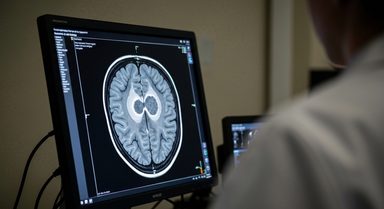
Gamma Knife Controls Craniopharyngioma but Symptom-Driven Interventions Remain Common
A 108-month study shows 89% 10-year survival, though 28% of patients require further intervention despite radiographic stability.
-

Complex Endovascular Aortic Repair Shows 83% Five-Year Survival Despite High Reintervention
A 14-year study of 916 patients reveals that while long-term survival is robust, 60% of patients require secondary interventions by year five.
-

FLAG-Ida Achieves 57 Percent Remission in Relapsed Acute Myeloid Leukemia
A 26-year multicenter study of 1,079 patients confirms the intensive regimen as an effective bridge to transplant for fit adults.
-

Virtual Neurology Visits Show Similar 90-Day Utilization to In-Person Care
A multicenter cohort study finds no significant difference in emergency department visits or hospitalizations after virtual consultations.
-
HLA Class III Variant rs915654 Predicts Survival in Haploidentical Transplantation
A specific genetic marker within the HLA class III region improves risk stratification for relapse and mortality in stem cell recipients.
-

Nirmatrelvir-Ritonavir Fails to Reduce Hospitalization in Vaccinated Outpatients
Two randomized trials show no significant clinical benefit for high-risk adults with prior immunity from vaccination or infection.
-

Early Enteral Nutrition Reduces Complication Burden After Pancreatoduodenectomy
A randomized trial shows immediate tube feeding lowers the comprehensive complication index in patients at high nutritional risk.
-

Institutional Habits Drive Extended-Release Opioid Use After Joint Replacement
A study of 229,995 arthroplasty patients finds that hospital and surgeon factors, not patient risk, dictate postoperative opioid dispensing.
-

Imaging Accurately Stages Nodal Squamous Cell Carcinoma Except in Immunosuppression
Ultrasonography and CT show 100% sensitivity in immunocompetent patients but fail to detect most early metastases in the immunosuppressed.
-

Optimal Sleep Duration Linked to Lower Dementia Risk in Focal Epilepsy
A UK Biobank study finds six to eight hours of sleep significantly mitigates cognitive decline and a five-fold dementia risk in epilepsy.
-

Anatomical Subtype and Nidus Embedding Predict AVM Surgical Outcomes
A 25-year study identifies visual and brainstem locations and embedded margins as key risks for deficits after AVM resection.
-

Essential Tremor Patients Retain Empathy Despite Cognitive Decline
A cross-sectional study finds no group-level deficits in empathy or emotional awareness in patients with essential tremor.
-

Baseline Well-Being Predicts Response to Adolescent Emotional Risk Intervention
Adolescents with lower initial quality of life show higher response rates to personalized preventive interventions for emotional disorders.
-

Family Structure Influences Adolescent Depression Risk and Resilience Levels
A study of 29,405 students finds higher depression rates in single-parent and skip-generation households compared to nuclear families.
-
Recent Psychotropic Initiation and Frequent ER Visits Signal Suicide Risk
A nationwide study identifies mood stabilizer initiation and fragmented emergency care as critical proximal markers of suicide risk.