
The Briefing · Psychiatry & Cognitive Neurology
Continuous newsroom coverage of evidence in Psychiatry & Cognitive Neurology — newest first.
Earlier
24 stories-
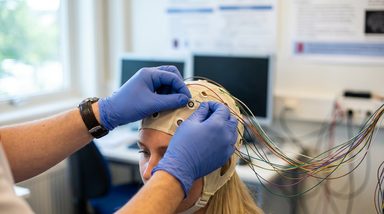
Brain-Wide Index Identifies Youth at Risk for Bipolar Disorder
A new study links a structural brain marker, the Regional Vulnerability Index for Bipolar Disorder, to familial risk and early symptoms.
-

Red Blood Cells Contribute Alpha-Synuclein to Parkinson's Brain Pathology
A new study in human tissues and mouse models identifies erythrocytes as a peripheral source of alpha-synuclein, influencing central nervous system.
-

Withholding Response Modulates Perceptual Biases, Alters EEG Signatures
Interrupting the perception-action cycle by omitting a response reconfigures sensory processing and electrophysiological activity.
-

ABCDEF Bundle Does Not Reduce Delirium, Improves Specific Quality of Life Domain
A randomized trial in Australian ICU patients found no delirium reduction with the ABCDEF bundle, but noted better 90-day 'usual activities' scores.
-

Multimodal Biomarkers Enhance Parkinsonian Syndrome Diagnosis
Combining dermal alpha-synuclein, 4-repeat tau SAAs, and serum neurofilament light chain improves diagnostic precision for neurodegenerative.
-

EPAC2 Antagonism Restores Cortical Function, Behavior in Fragile X Mouse Model
Targeting EPAC2 reverses molecular and functional deficits in a preclinical model of Fragile X Syndrome, suggesting a therapeutic avenue.
-

Swedish Registry Data Reveal 6-Factor Genetic Structure for Psychiatric Disorders
A large cohort study identifies shared genetic vulnerabilities across 18 psychiatric and substance use disorders, refining diagnostic understanding.
-

Low-Dose Buprenorphine Sustains Ketamine's Antisuicidal Effects in MDD
A randomized trial indicates sublingual buprenorphine extends ketamine's rapid reduction of suicidal ideation in major depressive disorder.
-
Widespread Cortical Alterations in Adolescent Early-Onset Psychosis
A large-scale mega-analysis reveals extensive structural brain differences in adolescents with early-onset psychosis compared to controls.
-

IL-6 Inhibition Shows Clinical Signals in Refractory Depression
A small trial of tocilizumab for difficult-to-treat depression suggests potential for symptom improvement and identifies patient selection markers.
-

Anhedonia Severity Predicts Intermittent Theta-Burst Stimulation Response in MDD
Baseline anhedonia levels influence neurophysiological and clinical outcomes following iTBS for major depressive disorder.
-
MIF Modulates Astrocyte Distribution in Schizophrenia Cortical Spheroids
A new study using patient-derived brain models identifies macrophage migration inhibitory factor (MIF) as a key regulator of astrocyte function.
-

Melittin Mitigates Doxorubicin-Induced Neurotoxicity in Murine Models
A study in mice suggests melittin, a bee venom component, reduces doxorubicin's neurotoxic effects by targeting inflammation and oxidative stress.
-

Low-Dose IL-2 Fails to Expand Tregs After Alemtuzumab in RRMS
A mechanistic study reveals that low-dose interleukin-2 alone does not boost regulatory T cells in alemtuzumab-treated multiple sclerosis patients.
-

MSK1 Mediates BDNF Signaling in Striatal Development, Affecting Psychiatric-Relevant Behaviors
A new study identifies mitogen- and stress-activated kinase 1 (MSK1) as a key mediator in brain-derived neurotrophic factor (BDNF) pathways critical.
-

Validating Generative AI Therapeutics: A Proposed Framework for Clinical Integration
A new framework outlines a multi-stage validation process to ensure the safety and efficacy of generative AI agents in mental health care.
-

Cerebellar iTBS Improves Post-Stroke Cognition via Dentate Nucleus-Ventromedial Thalamus Pathway
A mouse model study identifies the specific neural circuit mediating the cognitive benefits of intermittent theta-burst stimulation after stroke.
-

VSED with Hospice: Clinical Course, Symptom Management, and Patient Demographics
A case series details the clinical trajectory, symptom burden, and care needs of patients choosing voluntarily stopping eating and drinking.
-
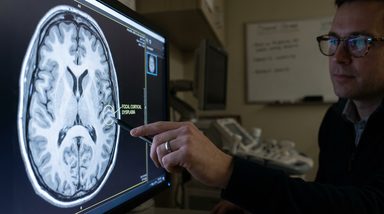
Chronic Pain Mechanisms Show Distinct Cortical Connectivity Patterns
A study using TMS-EEG identifies neurophysiological differences across nociceptive, neuropathic, and nociplastic pain phenotypes.
-

Amitriptyline Not Superior to Placebo for Leprosy-Related Neuropathic Pain
A randomized controlled trial found amitriptyline did not offer additional analgesia as add-on therapy for neuropathic pain in leprosy.
-
TMEM106B Variant Delays FTD Onset in GRN Mutation Carriers
A specific genetic variant significantly reduces FTD onset risk and extends median onset age by 14 years in GRN mutation carriers.
-

Muscle Cramp Impact Index Validated for Multidimensional Symptom Assessment
A new 14-item tool measures how muscle cramps interfere with sleep and daily life across neuromuscular, renal, and hepatic conditions.
-

New Tool Assesses Integrative Oncology Competencies in Trainees
A validated questionnaire helps evaluate baseline clinical skills in integrative oncology among healthcare provider trainees, supporting targeted.
-

Remote Multicomponent Rehabilitation Does Not Improve Quality of Life for ICU Survivors
A randomized trial found a 6-week remote rehabilitation program did not significantly enhance health-related quality of life at 8 weeks.