
The Briefing
Continuous newsroom coverage of clinically relevant evidence — newest first.
Earlier
24 stories-

Postpartum Psychosis Heritability Estimated, Specific Risk Genes Identified
New research quantifies genetic contributions to postpartum psychosis and identifies specific genes, including shared pathways with other psychiatric
-

High-Impact Sports Linked to 4-15-Fold Increased MND/ALS Risk
A scoping review identifies a significant association between professional participation in high-impact sports and elevated motor neurone disease risk
-
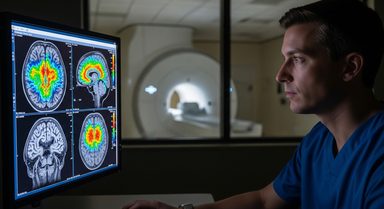
Neuroimaging Biotypes May Guide MDD Treatment, Improve Remission
Functional MRI-derived circuit profiles could personalize major depressive disorder therapy, potentially doubling remission rates.
-

NPM1-Mutated AML: Nuclear Condensates Drive HOX/MEIS1 Expression, Inform Menin Inhibitor Action
New research clarifies how mutant NPM1 forms nuclear condensates, sustaining oncogenic transcription and explaining menin inhibitor efficacy.
-

Apelin Mediates Exercise's Antidepressant Effects via Hippocampal NMDA Receptors
A muscle-derived protein, apelin, links physical activity to improved mood and neuroplasticity through a specific brain signaling pathway.
-

Specific Patient Profiles Face Up to 30% Risk of Severe Asthma Progression
A large Danish cohort study identifies key risk factors and patient characteristics associated with progression from mild-to-moderate to severe asthma
-

Three Genetic Loci Modify Risk and Onset of Inherited Alzheimer's Disease
Specific genetic variants influence disease risk and age of dementia onset in autosomal dominant Alzheimer's disease.
-

Bupivacaine-Dexamethasone TAP Blocks Reduce LOS, Opioid Use in DIEP Flap Patients
A retrospective study suggests bupivacaine with dexamethasone improves early pain control and shortens hospital stay after DIEP flap breast reconstruc
-

Fentanyl Differentially Modulates Dopamine Patterns, Impairing Reward Seeking in Mice
Acute fentanyl administration simultaneously increases tonic dopamine while reducing phasic dopamine responses to non-drug reward cues.
-

ICU Caregiver Financial Strain Linked to Psychological Distress, Medical Mistrust
A study of 97 ICU caregivers found that over 60% reported difficulty paying for care, correlating with increased anxiety, depression, PTSD, and decisi
-

Expert Consensus Standardizes SSA/Ro Autoantibody Nomenclature
A Delphi process involving 17 international experts recommends specific terms for anti-TROVE2/Ro60 and anti-TRIM21/Ro52 autoantibodies.
-

Abatacept Reduces Rheumatoid Arthritis Progression in Seropositive Palindromic Rheumatism
A randomized trial indicates abatacept significantly lowers the risk of developing rheumatoid arthritis compared to hydroxychloroquine over two years.
-
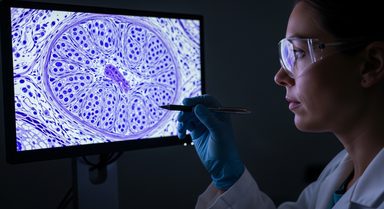
Cerebellar Disinhibitory Circuit Controls Motor Learning Signals
New research in mice reveals how synchronized climbing fiber activity selectively gates error signals to enable adaptive motor learning.
-

Ensitrelvir Reduces COVID-19 Incidence by 6.1% in Household Contacts
An oral SARS-CoV-2 3C-like protease inhibitor significantly lowers infection rates when given as postexposure prophylaxis.
-
Secreted GPNMB Drives Alpha-Synuclein Spread in Parkinson's Disease
A new study identifies a microglial-neuronal feedback loop involving GPNMB that exacerbates alpha-synuclein pathology, offering a therapeutic target.
-

Daratumumab-VCd Improves Survival, Organ Function in AL Amyloidosis
Final ANDROMEDA analysis confirms sustained benefits of D-VCd for newly diagnosed light-chain amyloidosis, including overall survival.
-

Skin Biopsy Distinguishes Body-First from Brain-First Parkinson’s Disease
Cutaneous alpha-synuclein signatures and seeding activity identify divergent pathological origins and autonomic denervation patterns.
-

TES Criteria Show Low Accuracy for CTE-NC Diagnosis
A study of 1,038 brain bank cases reveals that traumatic encephalopathy syndrome criteria poorly predict postmortem chronic traumatic encephalopathy.
-

Critically Ill Women in India Receive Less Organ Support, Show Similar Mortality
A large registry-embedded cohort study reveals sex-based differences in critical care provision without impacting adjusted mortality.
-

Indian ICUs: Women Receive Less Organ Support, Similar Mortality to Men
A large registry-embedded cohort study in India reveals sex-based differences in critical care resource utilization.
-

Gram-Negative Bacteria Dominate Neonatal Infection Deaths in LMICs
A multicountry study identifies Klebsiella pneumoniae and Acinetobacter baumannii as leading causes of neonatal infection mortality.
-

Intracranial Stimulation Prevents Attentional Lapses in Children
A new study identifies a real-time neural signature for attentional control, enabling targeted intervention to improve attention shifts.
-

Recent Trauma Exposure Linked to Increased V1 Thickness, Independent of PTSD Symptoms
A two-sample study identifies greater V1 thickness in recently trauma-exposed individuals, a finding distinct from PTSD symptom severity.
-

Tfr2 Essential for Acute Hepcidin Induction in Tfr1-Deficient Mouse Hepatocytes
A murine study reveals that transferrin receptor 2 and HFE must cooperate to trigger hepcidin during rapid iron fluctuations.