
The Briefing
Continuous newsroom coverage of clinically relevant evidence — newest first.
Earlier
24 stories-

Key Factors Drive Tidal Recruitment/Derecruitment in Spontaneously Breathing ARDS
A study identifies specific physiological and radiological determinants of lung injury in ARDS patients on pressure support ventilation.
-

Proximity-Based Lung Allocation Policy May Worsen Geographic Disparities
A new study suggests that increasing donor-candidate proximity in lung allocation could reduce donor availability and disadvantage harder-to-match.
-
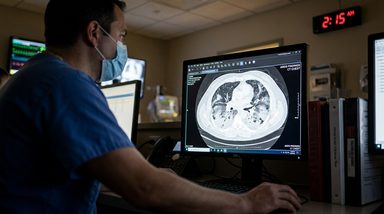
ECMO Escalation in ARDS: Prevalence, Mortality, and Hospital Volume Impact
A large Chinese cohort study details the incidence and outcomes of venovenous ECMO escalation in ARDS, highlighting mortality risks.
-

TFPI Essential for Embryonic Brain Vessel Development, Protein C Mitigates Defects
A preclinical study in mice reveals tissue factor pathway inhibitor's critical role in preventing cerebrovascular malformations and lethality.
-

Evolutionary Adaptation Reveals Neuronal Pathway for Myelination and Repair
A Retsat variant from high-altitude species uncovers a neuron-to-glia signaling mechanism that promotes central nervous system myelin formation…
-

Autoimmune Encephalitis Subtypes Identified in Rapidly Progressive Dementia
A multicenter study clarifies the prevalence and clinical presentations of specific autoimmune encephalitis subtypes in patients with rapidly progress
-

Initial Central Venous Puncture Reduces Blood Culture Contamination
Sampling blood cultures before central line insertion significantly lowers contamination rates without compromising pathogen detection.
-

Bispecific CAR T-Cells Show High Response in Extramedullary Multiple Myeloma
A phase 2 trial reports high overall response and manageable safety with anti-BCMA/GPRC5D CAR T-cells for relapsed/refractory disease.
-

Specific Genetic Elements Control Blood-Brain Barrier Endothelial Cell Function
Researchers identify a key DNA segment and transcription factors that regulate the unique gene expression of CNS vascular endothelial cells.
-
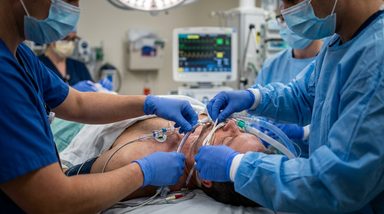
Early Bradycardia Predicts Need for Positive Pressure Ventilation in Newborns
An observational study quantifies heart rate response to tactile stimulation and identifies early bradycardia as a marker for advanced resuscitation.
-

PLANA Improves Presurgical Nasal Alignment in Unilateral Cleft Lip
A comparative study found Presurgical Lip-Alveolus-Nose Approximation (PLANA) led to better subnasale alignment than Nasal Elevator-based protocols.
-
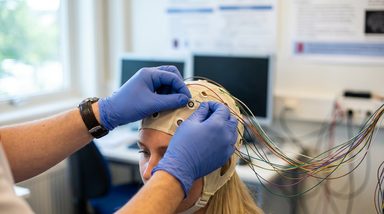
Linear Distance Modulates Brain's Gender Agreement Processing
A study in Norwegian speakers clarifies how word separation impacts neural responses to grammatical gender violations, using Event-Related Potentials.
-
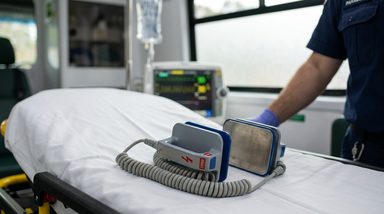
Double Sequential Defibrillation Implementation Shows No Survival Benefit in New Zealand EMS
A retrospective cohort study found no improvement in return of spontaneous circulation or 30-day survival after DSD introduction.
-

Autologous Reconstruction Reduces Failure Rates After Breast-Conserving Therapy
For patients with prior breast-conserving therapy, autologous reconstruction demonstrates significantly lower failure rates compared…
-
Bicarbonate Reduces Renal Replacement Therapy in Critically Ill Adults
A meta-analysis of four randomized controlled trials indicates sodium bicarbonate significantly lowers the need for renal replacement therapy.
-

Sickle Cell Trait Not Linked to Overall Mortality or Cardiovascular Disease
A large UK Biobank study finds sickle cell trait does not increase all-cause death or cardiovascular events, but associates with diabetes, kidney…
-

ATF2 Phosphorylation Drives Neuronal Apoptosis in Neurodegenerative Disease Models
A genome-wide screen identifies a specific molecular cascade involving ATF2 phosphorylation as a core driver of neuronal cell death.
-

Plantar Agraphesthesia Signals Lower Limb Cortical Sensory Loss in Corticobasal Syndrome
A case report details how plantar agraphesthesia can indicate cortical sensory deficits in the lower limb, even without hand involvement.
-

Successful HSCT Slows Brain Volume Loss in Adults With Sickle Cell Disease
A cohort study indicates that successful hematopoietic stem cell transplant is associated with preserved brain volume in adults with SCD.
-

Plain X-rays and Physical Exam Reliably Screen Pediatric Thoracolumbar Injuries
A multicenter study suggests dedicated spinal X-rays and physical exam can reduce unnecessary CT scans in children with potential spinal trauma.
-

Maternal Microbial Exposure Confers Intergenerational Stress Resilience in Male Mouse Offspring
Maternal administration of a heat-killed bacterium protected male offspring from chronic stress effects, potentially via microbiome changes.
-
Imdusiran Demonstrates Favorable Safety Profile in Early Hepatitis B Trial
A phase 1a/b study of the siRNA imdusiran shows it is well tolerated in healthy individuals and chronic hepatitis B patients.
-
Brazilian Study Pinpoints Persistent Critical Illness Onset at ICU Day 15
A large cohort study in Brazil identifies the transition to persistent critical illness at 15 days, impacting resource utilization.
-

TP53 and 5q Deletion Drive AML-CK Aneuploidy, Create BCL2 Vulnerability
A new study identifies the genetic drivers of complex karyotype acute myeloid leukemia and a targetable BCL2-dependent vulnerability.